Savers in this article
Saver guide
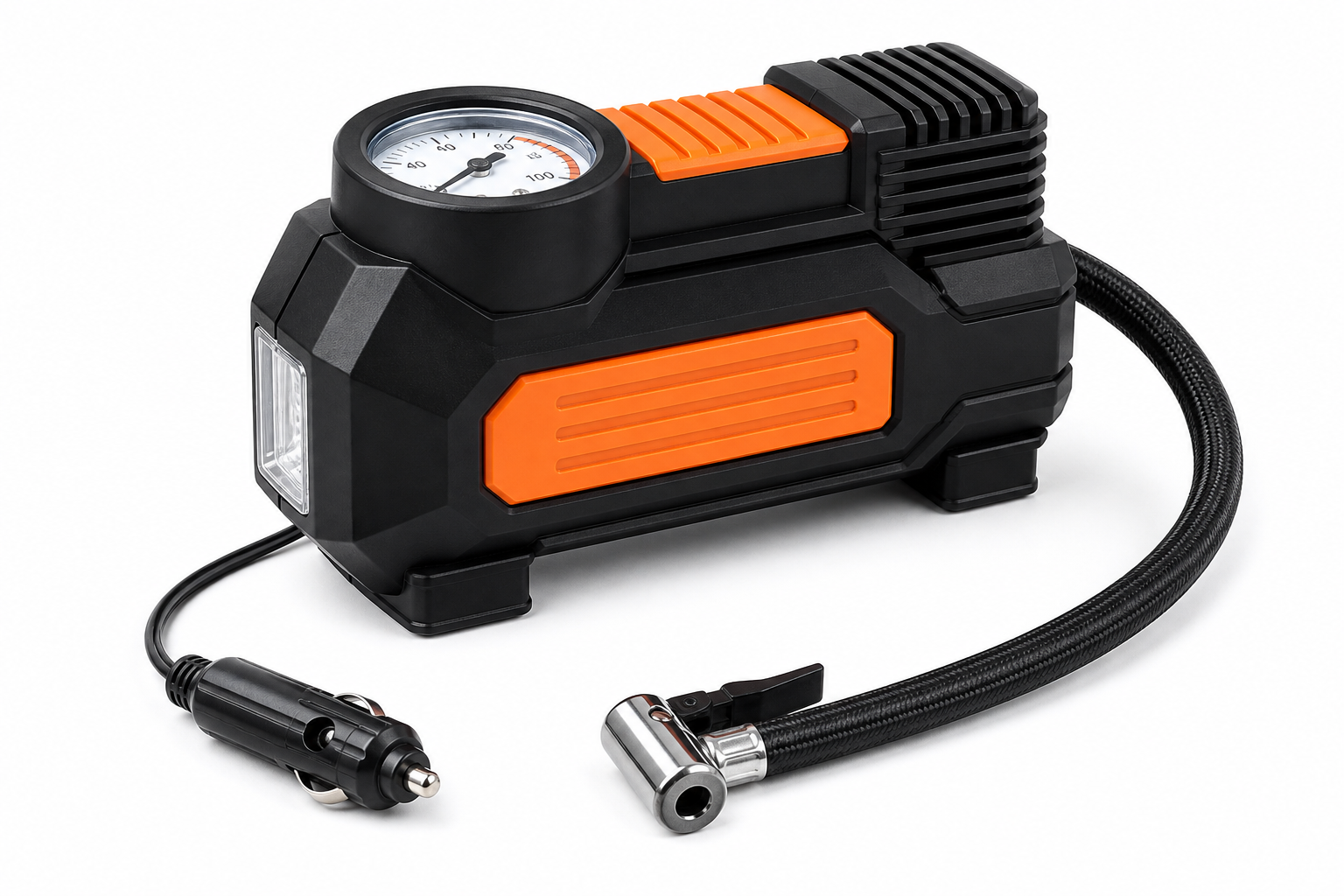
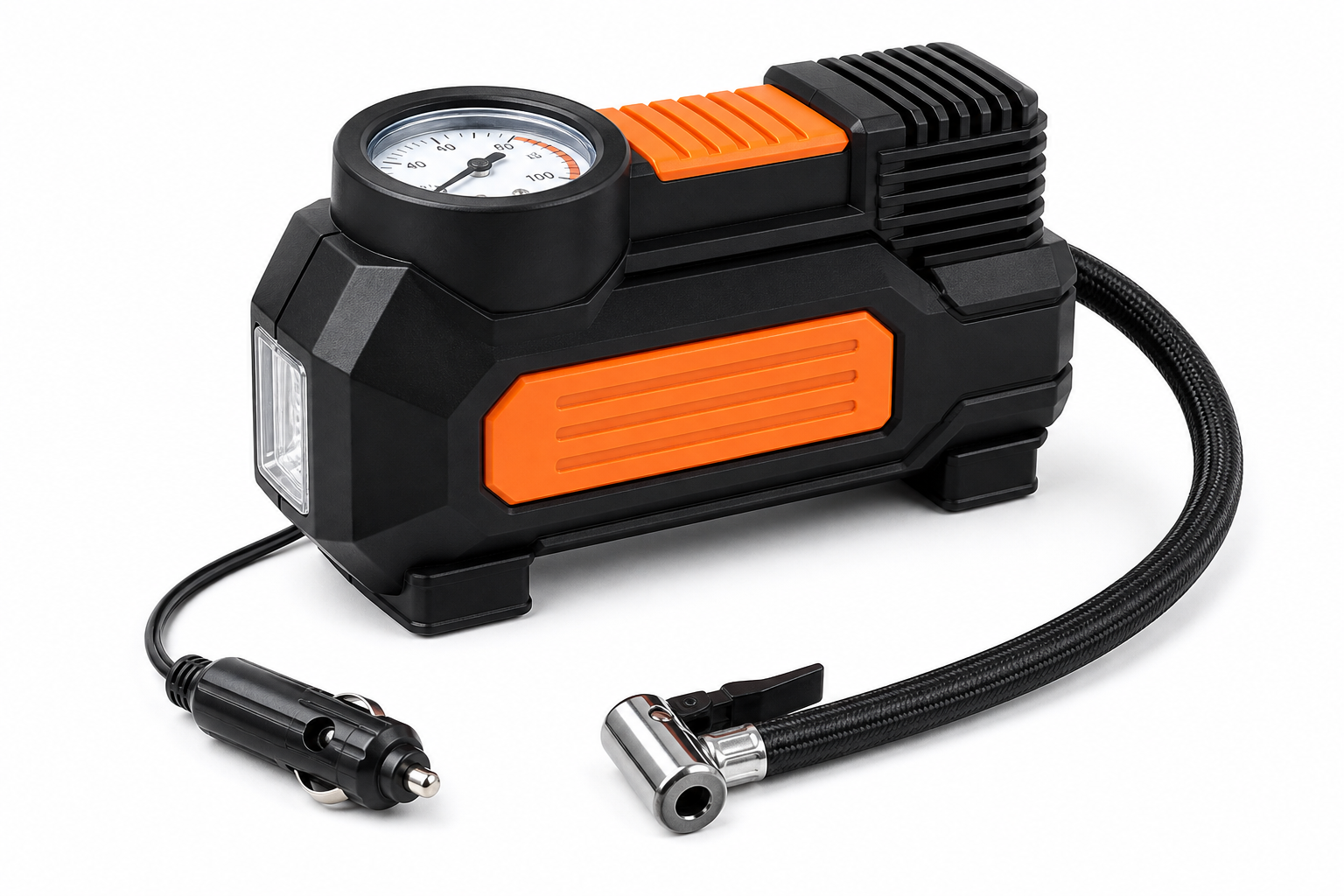
Portable 12V air compressor
Top up tires anywhere there’s a socket
How it works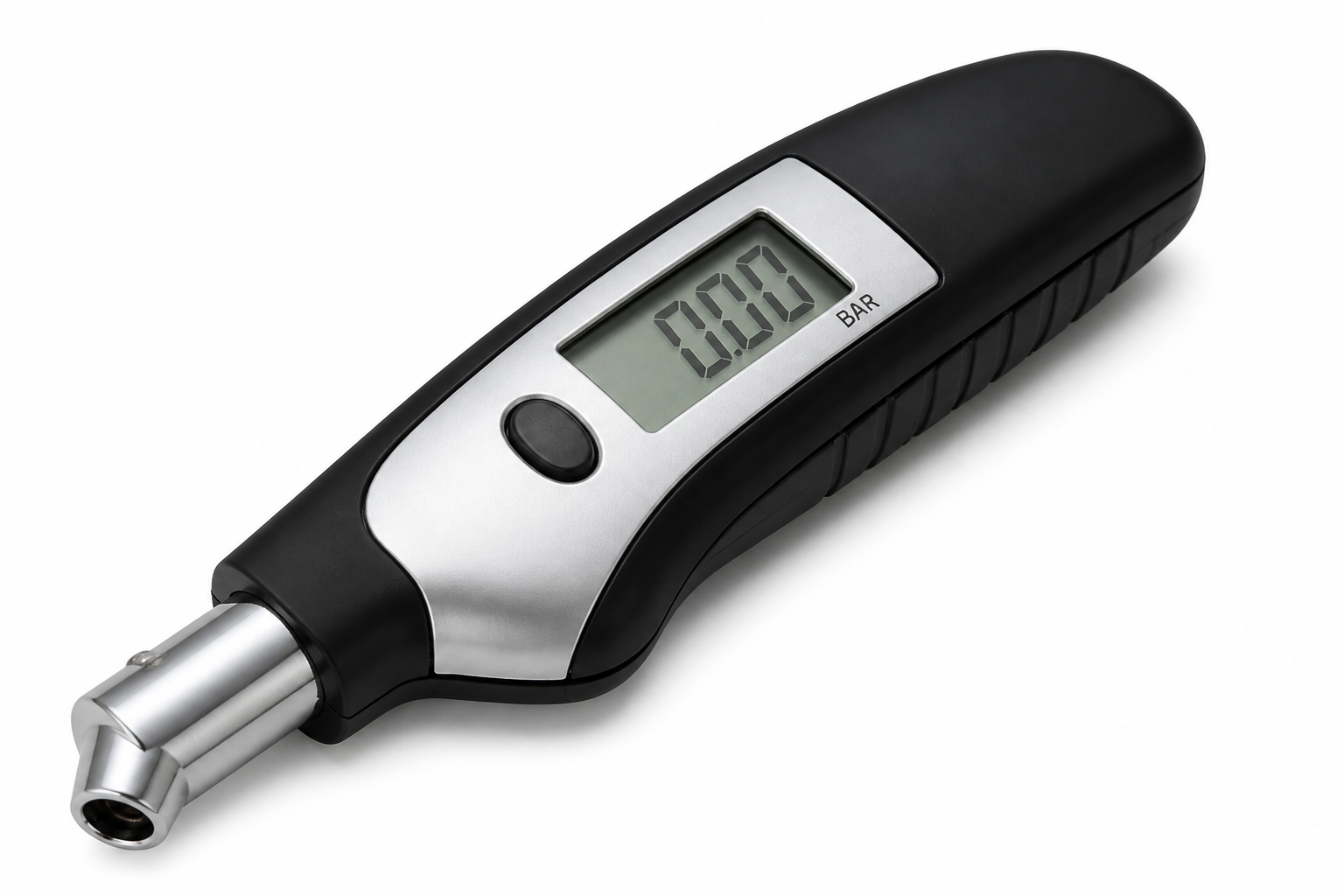
Saver guide
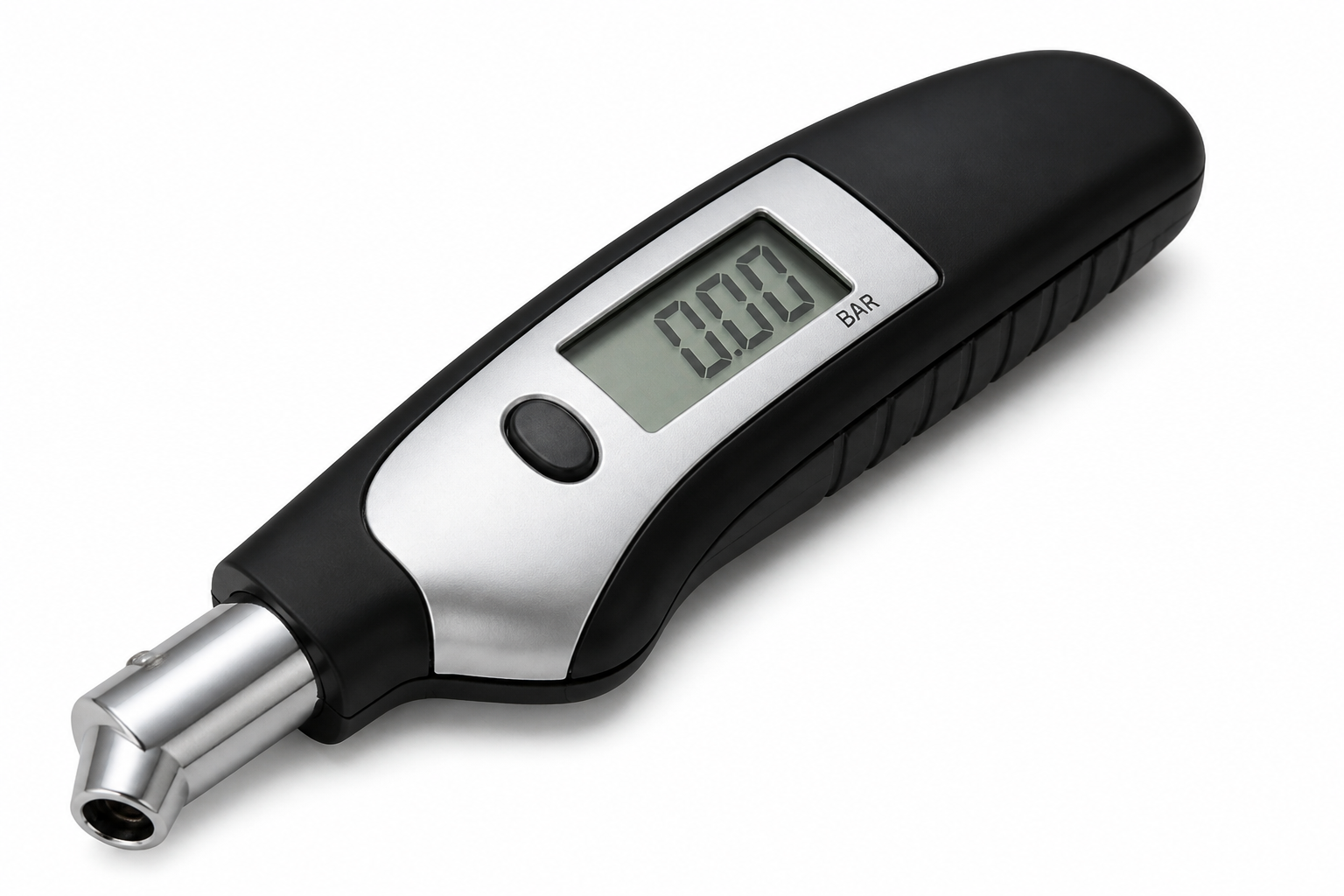
Digital tire pressure gauge
Correct PSI = real fuel and tire life
How it worksA compact 12V air compressor lives in the trunk until the morning a tire looks soft and you’re late. We tested budget units for accuracy, duty cycle, and whether the “auto shutoff” actually hits the setpoint.
Verdict up front: a basic digital unit with a decent hose beats the cigarette-lighter toys that overheat after one tire. Here’s how to choose and use one without cooking the motor.
What we measured
We inflated from 28 to 35 PSI on a passenger tire and checked against a trusted gauge. Cheap analog dials on the compressor itself were often 2–4 PSI optimistic — always verify with a separate gauge.
- Prefer units with an accurate digital gauge and auto-stop.
- Check the power plug fit — loose 12V sockets cause fake “failures.”
- Duty cycle matters: rest the motor between tires on a full car set.
How to use it without drama
Park safely, engine running for longer fills if the manual allows, and don’t sit on the trigger after the beep. Store the hose uncoiled from sharp kinks. Keep a gauge in the glovebox even if the compressor has one.
Skip these
Ultra-cheap no-name units with melting plugs, and “never check pressure again” marketing. A compressor is a tool, not a TPMS replacement.
Accuracy beats max PSI bragging rights.
If you drive winters or long highway stretches, a trunk compressor plus a plug kit covers most soft-tire mornings without a shop visit.
Join our community of like-minded people
12,480+ people already save with Enrev. One email a week, a free PDF right after you subscribe, and zero spam.
🎁 PDF “10 hidden money leaks in your home” — right after you subscribe.
Keep reading